February 2026 — KAIST PhD student collaborates with London Biofoundry at Imperial College
London, UK
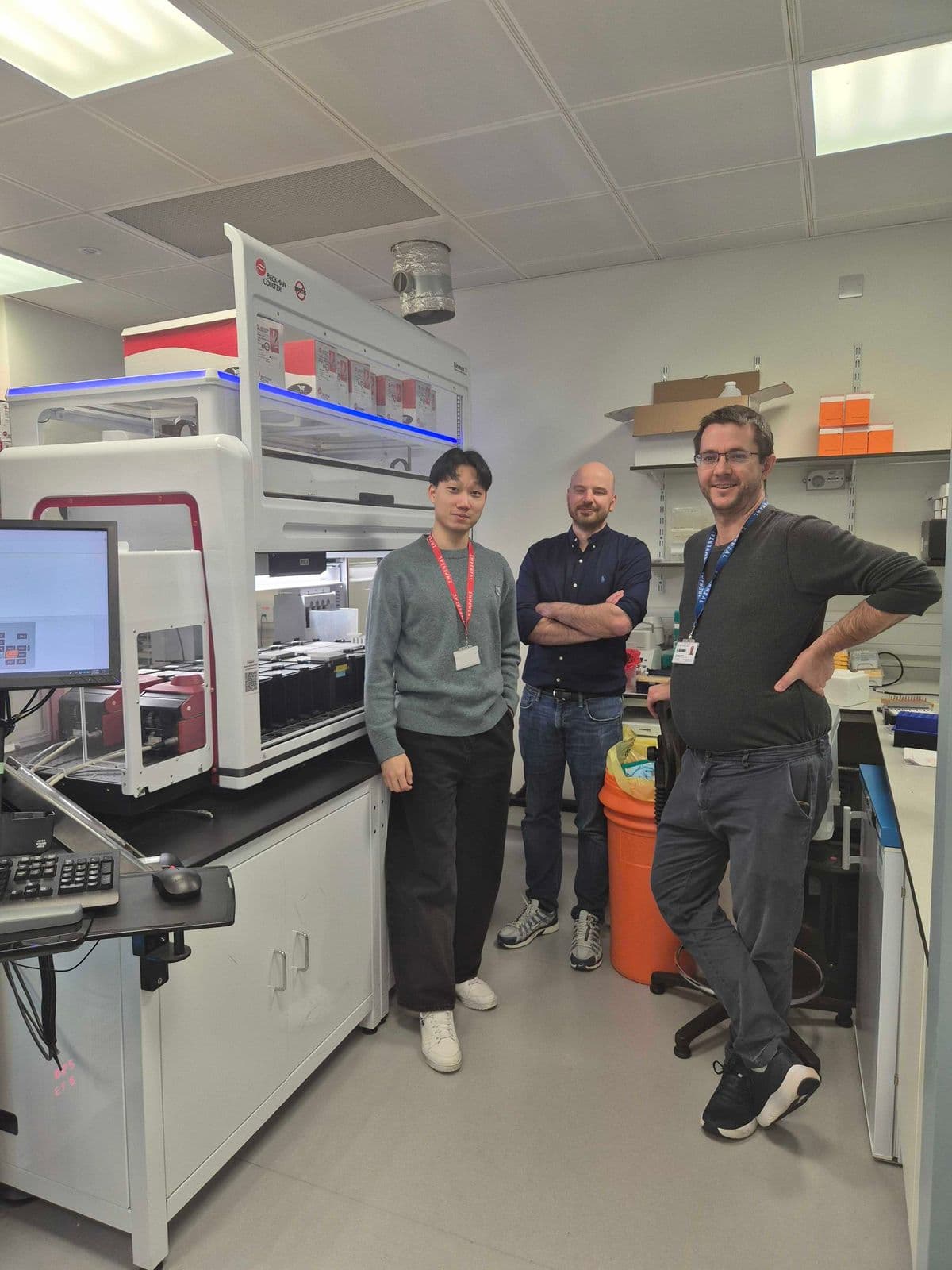
Sanghyun Chung, PhD student from KAIST, shares insights from his time working at Imperial College London and collaborating with the London Biofoundry as part of the UK-Korea Research Partnership on Engineering Biology.
Sanghyun Chung, PhD student from KAIST, shares insights from his time working at Imperial College London and collaborating with the London Biofoundry. As part of the UK-Korea Research Partnership on Engineering Biology, Sanghyun Chung participated in a research placement at Imperial College London, strengthening research ties between Imperial and the Korea Advanced Institute of Science and Technology.
What is the objective of the project you are currently working on?
This project aims to construct plasmids containing diverse mutated sequences and compare their activity using a cell-free system in order to identify genetic elements that enhance protein expression. The ultimate goal is to provide useful synthetic biology tools based on organisms such as Streptomyces, whose genetic elements and functions are not yet fully understood. In particular, high-throughput screening in collaboration with the London Biofoundry is a key technological component of this study.
What do you plan to do next on this project?
Although DNA is composed of only four nucleotides, the biological diversity generated by their combinations is comparable to the expansion of the universe. At Imperial College London, the next step is to identify key sequences within this vast pool that enhance protein production, analyse their trends, and subsequently optimise them. Furthermore, it will be necessary to demonstrate that these results function not only in a cell-free system but also in vivo. In addition, I plan to improve the intrinsic yield of the cell-free system itself through technical repetition and accumulated experience to facilitate the screening stage. There are still many exciting challenges ahead.
What are the main differences in the facilities and ways of working between your host institution and home institution?
At the host institution, the preparation of cell-free extracts for in vitro screening and the subsequent DNA analysis processes are carried out on a much larger scale overall. I have generally conducted experiments focused on carefully optimising specific aspects within a relatively small scope. Here, however, I had the opportunity to explore approaches I had not previously encountered, particularly in identifying new optimal concentrations of specific components required for protein expression strategies. Automation and high-throughput equipment are essential in these processes, and working with such advanced systems has been an extremely valuable experience.
What have you enjoyed most so far during your time at Imperial?
The most rewarding moment as a researcher was when a hypothesis that I had discussed with my supervisor at the host institution at the beginning of this project began to show supporting trends through experimental results. In addition, I greatly enjoyed the opportunity to learn and share experimental techniques with others working in related fields. The time I have spent with them here will remain unforgettable.
What are you hoping to do next in your career?
I would like to work in the field of discovering and expressing valuable biological products, as well as scaling up and automating these processes. I believe this technology has broad applications across universities, research institutes, and industry. The experience I have gained at Imperial College London will be a significant asset in my future career.