April 2026 — Imperial College PhD student completes three-month research placement at KAIST Daejeon
Daejeon, Republic of Korea
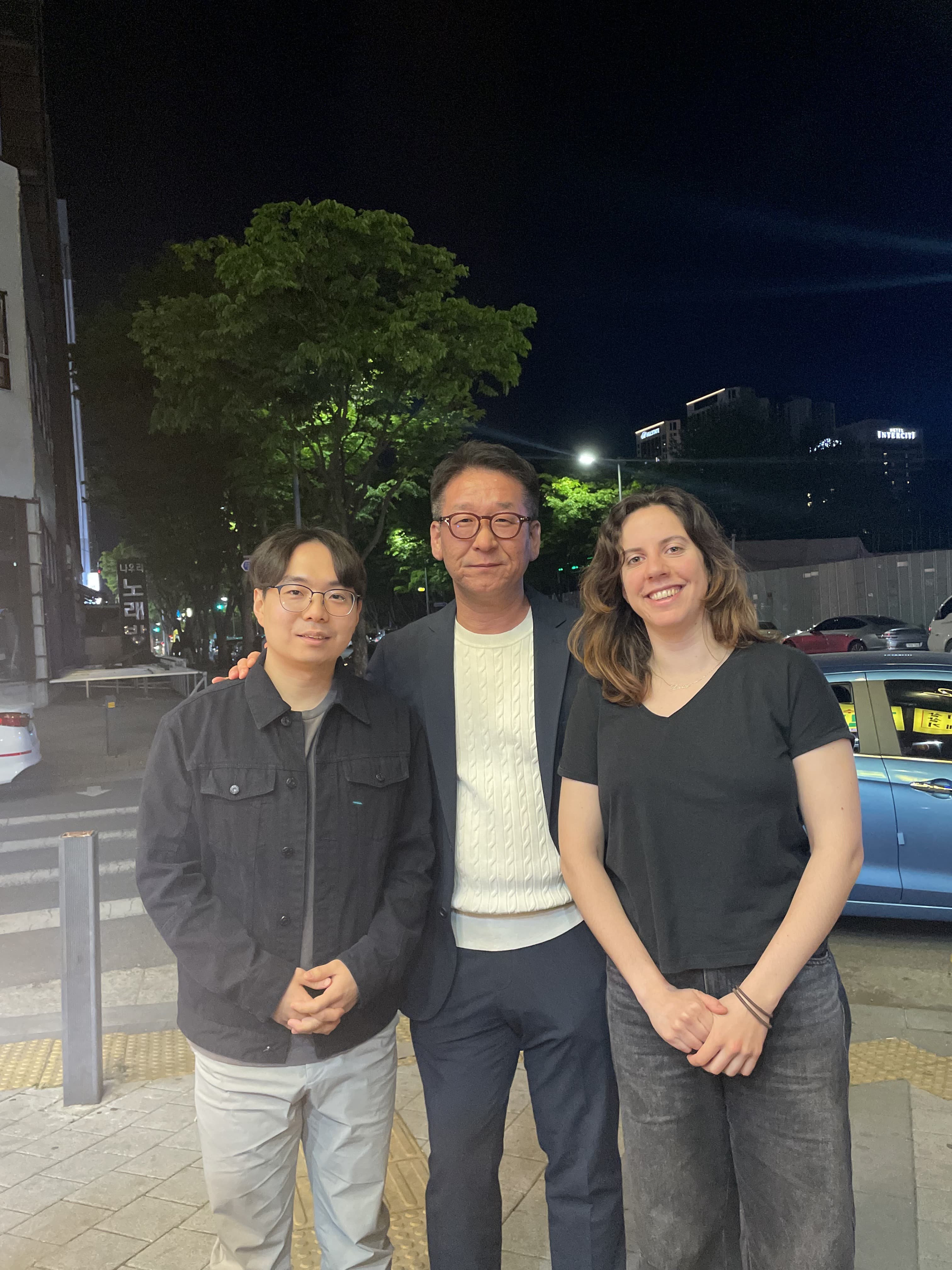
Livia Soro, PhD student from Imperial College London, shares her experience from a three-month placement at the Systems and Synthetic Biology Lab at KAIST, hosted by Professor Byung-Kwan Cho.
Livia Soro, PhD student from Imperial College London, shares her experience from a recent three-month placement at the Systems and Synthetic Biology Lab at KAIST, hosted by Professor Byung-Kwan Cho. As part of the UK-Korea Research Partnership on Engineering Biology, this placement strengthened research ties between Imperial College London and the Korea Advanced Institute of Science and Technology.
What is the objective of the project you are currently working on?
The objective of the project is to study the changes in the transcriptional regulatory network of a gut microbiome symbiont, Bacteroides thetaiotaomicron, in response to different growth conditions.
What do you plan to do next on this project, on return to the UK?
The framework I used to analyse B. theta's transcriptomic datasets, called the iModulon framework, is used to group genes which behave as a "module" across experimental conditions. A module is a group of genes which can be co-regulated or involved in the same functions. This greatly reduces the dimensionality of the datasets to be analysed and allows a biologically relevant clustering of the organisms' genes. On return to the UK, I plan to apply this framework to our organism of interest.
What are the main differences in the facilities and ways of working between your host institution and home institution?
My project at KAIST was completely computational whereas back at Imperial I am mostly in the lab, making the two experiences hardly comparable. What made the visit worth it was the opportunity to collaborate directly with people who have the relevant experience. Ultimately, the Centre for Engineering Biology at Imperial and the Systems and Synthetic Biology Lab at KAIST both advance our knowledge on a range of topics aiming to solve real-world problems and the dedication to the research is remarkable at both institutions. The protocols, the equipment, the questions might vary but not significantly. But if I really must mention a difference, I'd have to say the spaciousness of the buildings (real estate in London might potentially be more expensive than in Daejeon!).
What have you enjoyed most during your time at your host institution?
Working in a lab with great expertise in systems biology gave me a novel perspective that complements my synthetic biology background and fascinates me. In addition, I am very grateful to have been able to analyse the transcriptomic data collected in-house and to have had the support of Dr Kim in learning this new framework.
What are you hoping to do next in your career?
As the quality and abundance of omics data are still improving and increasing, I am most excited about all there is still to learn about the biology and interplay of the microorganisms that surround us, from the models to the most under-studied ones. I will keep developing my analysis skills and hope to keep working at the interface between the test and learn phases of the DBTL (Design-Build-Test-Learn) cycle.